A Shopify B2B practitioner portal is a login-gated ordering account for the clinics, retailers, and distributors that buy a supplement brand's products on wholesale terms: an approved company sees its own price list, orders in case quantities, pays on net terms or against a PO number, and reorders from history, on the same Shopify store that runs the DTC side. Core B2B is included on the Basic, Grow, Advanced, and Plus plans; Plus adds unlimited catalogs, direct catalog assignment, and deposits. Liquid Lemon is a Shopify / Shopify Plus design + development studio for DTC and CPG brands, and builds the practitioner channel into the storefront: approval path, company and catalog structure, the portal, and the reorder pattern that stands in for subscriptions, which B2B does not support.
The general service is on our Shopify B2B development page; this covers the supplement-specific decisions.
What does a practitioner or wholesale channel mean for a supplement brand on Shopify?
It means three buyers who behave differently. A practitioner stocking a clinic shelf orders 6 to 24 units of a daily multivitamin at a fixed practitioner price and reorders when the shelf runs low. A retailer or distributor orders by the case or pallet, pays net 30, needs a PO number, and may ship to several addresses. The third holds no stock and sends clients to the DTC store with a code.
Shopify B2B models the first two with the same objects: a company, one or more company locations, contacts with roles, and a catalog that sets the prices and product set that company sees. The referral practitioner is the exception: a DTC order with attribution, which runs through discounts and segments. Most supplement brands have a mix, so the first job is sorting the account list.
What does core Shopify B2B include on Basic, Grow, and Advanced, and what does Plus add?
Shopify B2B requires Basic, Grow, Advanced, or Plus. Across those four, most B2B features are included; Plus adds scale and payment structure.
| Capability | Basic, Grow, Advanced | Shopify Plus |
|---|---|---|
| Companies, locations, contact roles | Included | Included |
| Catalogs (price list plus product set) | 3 active catalog assignments across active B2B markets | Unlimited, assigned directly to a company or company location |
| Quantity rules (min, max, step) and tiered pricing | Included | Included |
| Net terms, payment reminders, PO numbers | Included | Included |
| ACH for B2B (Shopify Payments; US store in USD, 100+ fulfilled orders, identity verified; US bank account) | Included where eligible | Included where eligible |
| Draft order to invoice, quick order list, Trade theme | Included | Included |
| Deposits, partial payments, payment requests per fulfillment | Not available | Included |
| Contextual storefront and checkout through Markets | Advanced only | Included |
| Checkout UI extensions on information, shipping, and payment steps | Not available | Included |
One prerequisite on all four plans: B2B only works with Shopify's current customer accounts system. If the DTC store still runs legacy accounts, the switch is part of the build and changes the DTC account pages too. Shopify Payments eligibility is a separate question (its US prohibited list doesn't name dietary supplements; hemp and CBD are excluded), covered in our Shopify Payments piece for supplement brands. The plan decision is covered in Shopify Advanced vs Plus.
How does practitioner gating work on Shopify?
Shopify Forms has an account request form. On submission, Shopify creates a company, a company location, and a customer in the admin with ordering not approved, and the brand approves it or deletes it. Contacting the applicant first is also an option. One limit: the request flow creates new companies only and can't add a contact to an existing company.
The brand runs verification. It decides what proves a practitioner is a practitioner, whether that is a license number or a document upload, and who reviews it. Liquid Lemon builds the form fields and the review queue, pending state included, to the brand's criteria, and takes no part in evaluating credentials.
Companies replace the old customer-tag-and-hidden-collection pattern for stocking accounts. For the referral practitioner, Shopify segments (ShopifyQL-defined customer groups) set discount eligibility without a company record.
How do you set practitioner pricing with catalogs and markets?
A catalog is a price list plus the products it applies to. On Basic, Grow, and Advanced, a catalog reaches a company through a B2B market, and the store can hold 3 active catalog assignments across active B2B markets. The limit is on assignments: each catalog attached to a market uses one, and every company in that market sees the same prices. Direct catalog assignment to a company isn't available on these plans.
On Plus, catalogs are unlimited and assigned directly to companies or company locations. A distributor with a negotiated price gets its own catalog; a clinic group with 12 locations can carry one price at the head office and another at a satellite.
Quantity rules sit on the catalog too: a case of 12 becomes minimum 12 and increment 12. Tiered pricing gives volume breaks. Product visibility is separate: all products are available to both B2B and DTC by default, and adding a SKU to a B2B catalog doesn't remove it from the DTC storefront. A practitioner-only SKU, say a 90-day supply never sold DTC, is published to the practitioner catalog and unpublished from every Region catalog, which hides it from DTC customers.
Can practitioners subscribe through Shopify B2B?
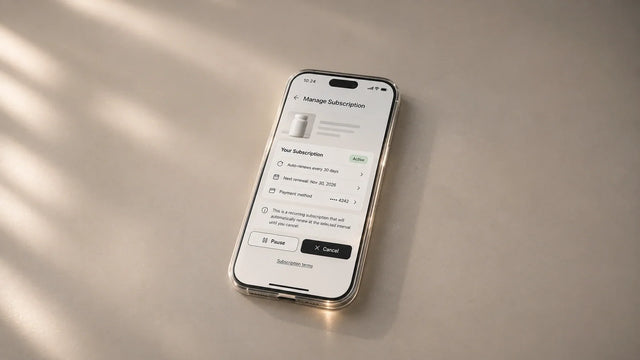
No. Shopify's documentation states that B2B doesn't support purchase options, such as subscriptions, pre-orders, and try before you buy. A clinic that wants a standing monthly order needs one of these patterns.
Draft order to invoice. The brand or a rep creates the standing order as a draft each cycle, sends the invoice, and the company pays on its net terms. Shopify Flow handles the notifications; it has B2B objects. Best for distributors, and for any order that needs a human check before it ships.
Reorder from history. The quick order list and order history make a repeat order a two-minute job, and a reminder email at the clinic's cadence does the prompting. This fits most clinic accounts, where the order shifts a little each time.
A DTC-style flow outside B2B. If the practitioner buys two units a month, treat them as a DTC subscriber with a practitioner discount set through segment eligibility, and keep them off company accounts. Shopify Bundles can't be sold with selling plans, so a bundle on subscription needs the subscription app's own bundling. The selling plan mechanics are in our subscriptions piece for supplement brands.
What does the practitioner portal do after login?
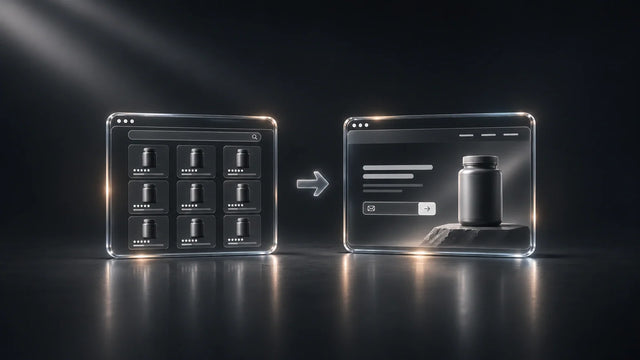
The approved contact lands in a customer account scoped to their company. With more than one location they pick the one they are buying for, and prices, quantity rules, and product set switch to that location's catalog. From there: a quick order list for case-quantity entry, order history with reorder, open invoices for net-terms orders, payment reminders, and a PO number field at checkout.
On Plus, checkout UI extensions on the information, shipping, and payment steps can read the purchasing company and change what the buyer sees: a required PO field for distributors, or a deposit on a first order. The Plus gate applies to UI extensions on those three steps only. A headless storefront gets contextual B2B pricing and quantity rules when its Storefront API requests carry the customer access token and the company location ID; that covers the pricing piece only. The portal build is detailed on our wholesale account portal page.
Should the practitioner channel share the DTC store or get its own?
Share it, in most cases. One store means one admin, one app stack, and one inventory system with as many locations as needed. The B2B contact logs into the same domain and sees catalog prices in place of DTC prices; product visibility is set by catalog publishing, as above. The Trade theme or B2B blocks in the DTC theme carry the portal pages.
| Decision point | Blended store (one Shopify store) | Dedicated wholesale store (second Shopify store) |
|---|---|---|
| Inventory | One admin; a wholesale warehouse or 3PL is a location in the same store | Two stores to keep in sync |
| Pricing and product exposure | Catalog prices replace DTC prices after login; B2B-only SKUs unpublished from Region catalogs; contextual storefront on Advanced and Plus | Fully separate by design |
| Fits when | Clinics and small retailers buying the DTC assortment | Distributor terms or SKUs conflict with the DTC brand |
Go dedicated when the wholesale assortment barely overlaps DTC, when distributor pricing cannot sit on the same domain for contractual reasons, or when an integration forces it. A second warehouse is not a reason; it registers as another location in the same store (10 active locations on Basic, Grow, and Advanced, 200 on Plus; a 3PL app holding stock doesn't count). For a CPG brand already in retail, the broader store architecture is in Shopify for CPG brands.
When should you build a practitioner portal, and when shouldn't you?
Our own threshold: build it when 20 or more accounts order by email or PDF order form and a rep keys them into the admin by hand, or when practitioner pricing lives in a spreadsheet and net terms in someone's inbox. Core B2B replaces each of those on the plan you already pay for. Build it on Plus when negotiated pricing varies by account, when more than 3 catalog assignments are needed, when distributors need deposits or partial payments, or when checkout itself has to change for B2B buyers.
Fewer than 10 accounts doesn't justify it; draft orders and invoices cover that volume. Neither does a "practitioner channel" that is really referrals, which is a discount and attribution problem on the DTC side. B2B subscriptions are the other wrong reason to build. Shopify doesn't offer them.
What does a Shopify B2B practitioner portal cost?
Liquid Lemon builds custom-coded Shopify stores in a 30-day Sprint at a flat price: $9,500 for new brands and $12,500 for established brands, with catalog, customers and apps carried over. Shopify Plus and enterprise builds are scoped separately. A practitioner portal is a B2B build, so Liquid Lemon quotes it after a call as a fixed figure with no hidden fees, covering the approval path, company and catalog structure, quantity rules and net terms, portal pages, and the reorder pattern. What adds scope: checkout UI extensions on Plus, a custom app with Functions (Plus only), an ERP or 3PL integration that releases wholesale orders on approval rather than payment, a headless storefront, or a second store. Plus builds run through our Shopify Plus agency practice.
Send your account list sorted by type (clinic, retailer, distributor), your price tiers or negotiated prices, your plan and whether customer accounts are new or legacy, your 3PL or ERP, and how recurring orders are placed now, through Start Your Sprint. We'll return the catalog structure, whether you need Plus, and whether it fits a Sprint or needs a fixed quote.
Written by Andrew Zam, co-founder of Liquid Lemon, a Shopify / Shopify Plus design + development studio for DTC brands.